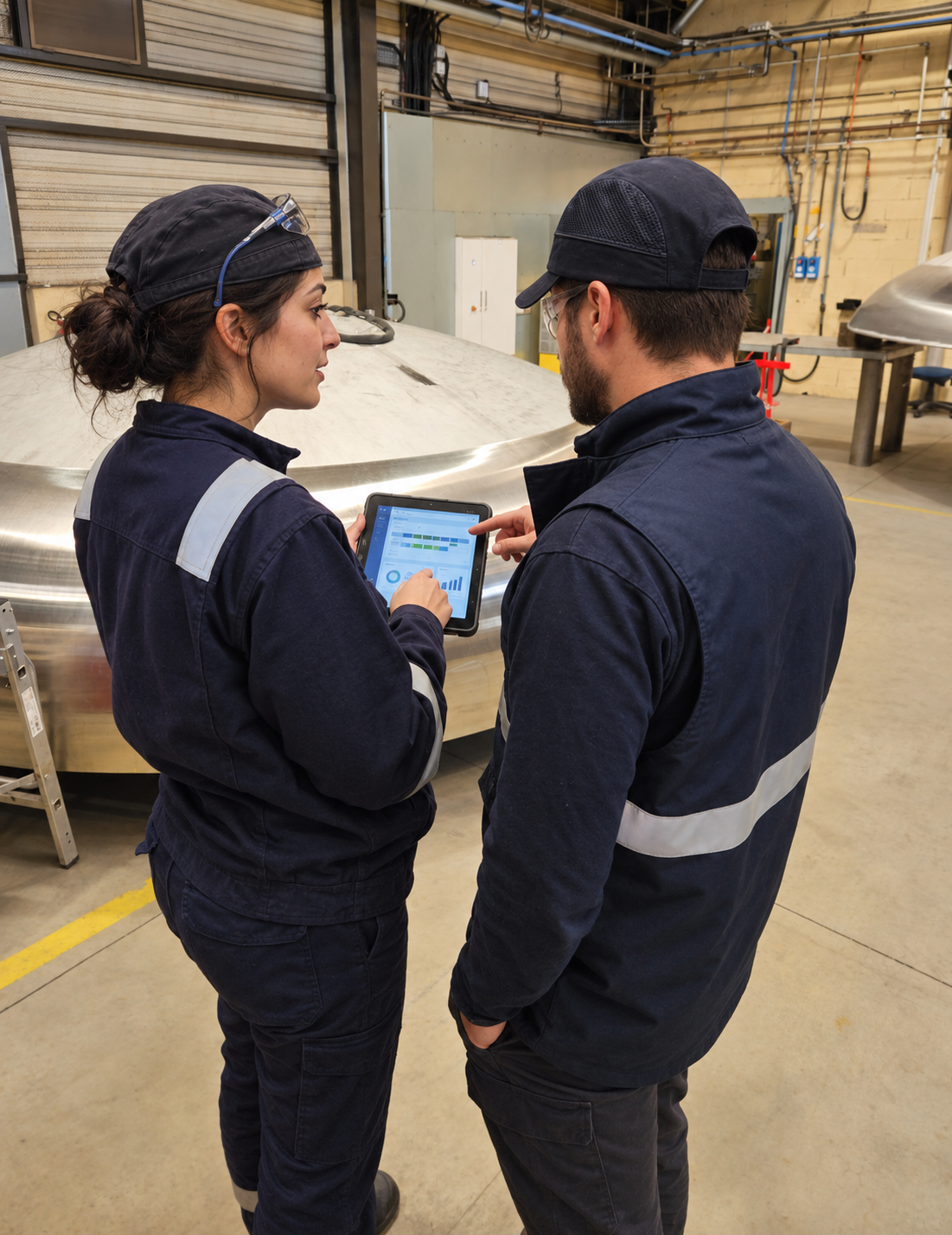
In every department, a few people hold much of the know-how and answer questions from the whole team. When it is time to transform the department, they are the people everyone expects to be involved — and the people nobody can spare.
An industrial group specialising in high-precision welding is digitising weld tracking across several branches and a fabrication workshop. These welds carry the company's responsibility to its customers: this is a strategic project. Each site appoints a champion to help colleagues adopt the tool.
In July, the methods lead takes stock. At one branch:
“There is only one person who is really involved. […] He is running around doing the branch's work. So I think he just cannot find the time.”
At another, the appointed person could not attend the training:
“Even their champion has not actually been trained […]. The champion cannot even really help drive things forward.”
The key-person paradox: too valuable to free up
The head of digital transformation had anticipated this back in April:
“We identify key users […]. But these people are also busy with day-to-day production, and they will end up having to provide support, handle rollout, and so on. That is often what really slows things down.”
There lies the paradox. We put change in the hands of people who know the job, and those people are constantly in demand. The more central someone is, the more a day of their absence costs the workshop. The software provider's project manager draws a clear conclusion:
“I consider all the champions to be at risk, to different degrees, but in my view they all are.”
How can knowledge circulate without them?
The answer lies in what the teams improvised. The methods lead prepared “short guides to creating weld tracking sheets in bulk, so they can follow the sheet and at least be independent with that”. In the welding workshop, an engineer points to the value of a colleague who “has also understood the software well, and can help others when they get stuck”.
Every answer people find without the key expert gives that expert time back. Time they can then devote to the transformation itself.
What is happening: the bottleneck (Goldratt)
In The Goal, Eliyahu Goldratt shows that a workshop's pace is set by its busiest station: the bottleneck. An hour lost at the bottleneck is an hour lost for the entire workshop. To move faster, relieve the bottleneck of everything others can do instead. In a transformation project, that bottleneck is often a person: the expert everyone turns to with questions.
This is one of PERIVIA's core principles: enabling experts to delegate part of the sharing of their practical knowledge, so the team depends on them less. What they know how to do is captured once, then made available to everyone at their workstation.
To transform a department, start by making your key people less indispensable to everyday work. Use PERIVIA.