Knowledge sharing
How do you transform a team when its key people already have their hands full?
In every team, a handful of people hold most of the know-how. How can you move change forward when everyone already needs their help?
Read the article
Change on the shop floor
Transforming a department without stopping production means rebuilding the bridge without closing it. What if the project came straight to the shop floor?
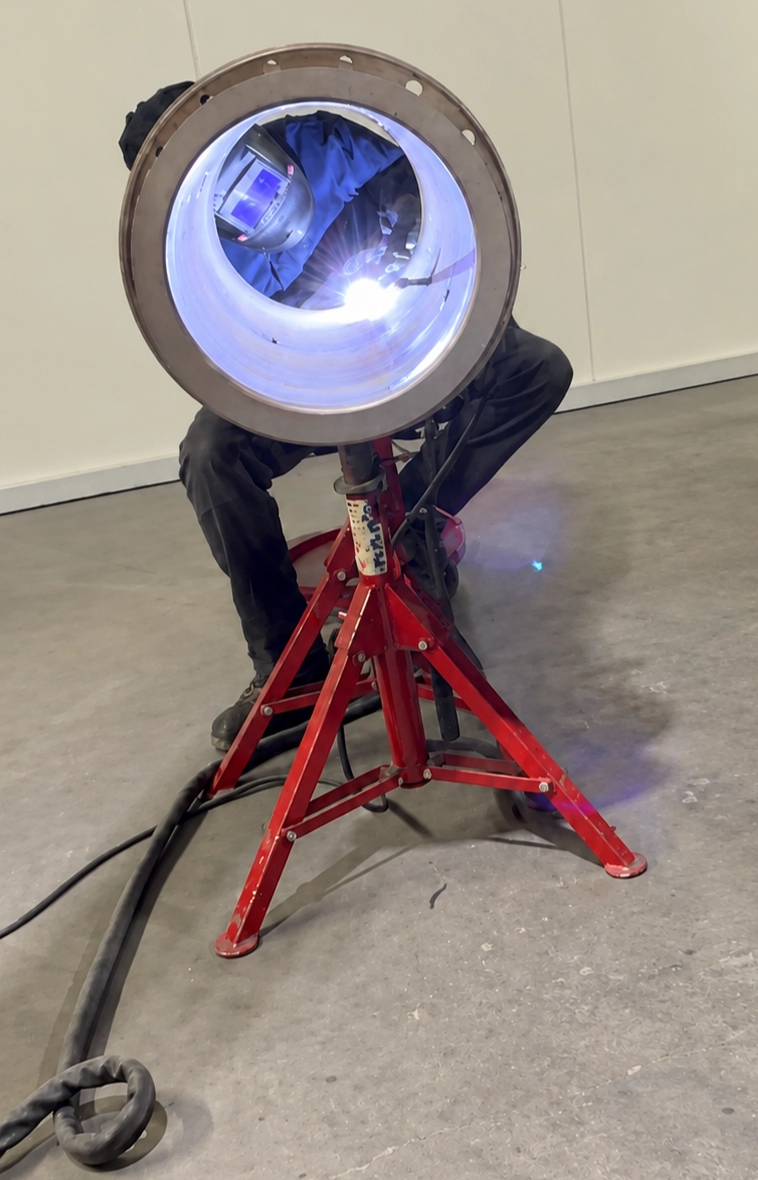
Transforming a department without stopping production means rebuilding the bridge without closing it to traffic. At one welding company, what worked was what took shape directly on the shop floor, one small step at a time.
An industrial group specialising in the nuclear sector takes responsibility towards its customers for every weld it produces. It is rolling out a weld tracking tool across several branches and a fabrication workshop. The planned approach is familiar: three days of classroom training, followed by a launch at each site.
The initial training has eight places. At one branch, the designated person cannot attend: the site starts without a single trained user. A few weeks later, a steering committee invites the 15 people who attended the kick-off. Many do not reply, and the meeting is pushed back to September. For the project team, the conclusion is clear: scheduling dry runs that take teams away from production causes the most difficulty.
Every step that requires people to leave their workstation becomes a source of friction: absences on one side, postponements on the other. And even successful training fades when it is too far removed from actual use. A consultant from the software provider sums it up:
“If the person does not put it into practical use straight away, it is lost.”
There is a surprise in one entity's workshop: welders have started using the tool for simple tasks. The quality lead observes that the welders:
“Are doing well, I think. Without having had the training.”
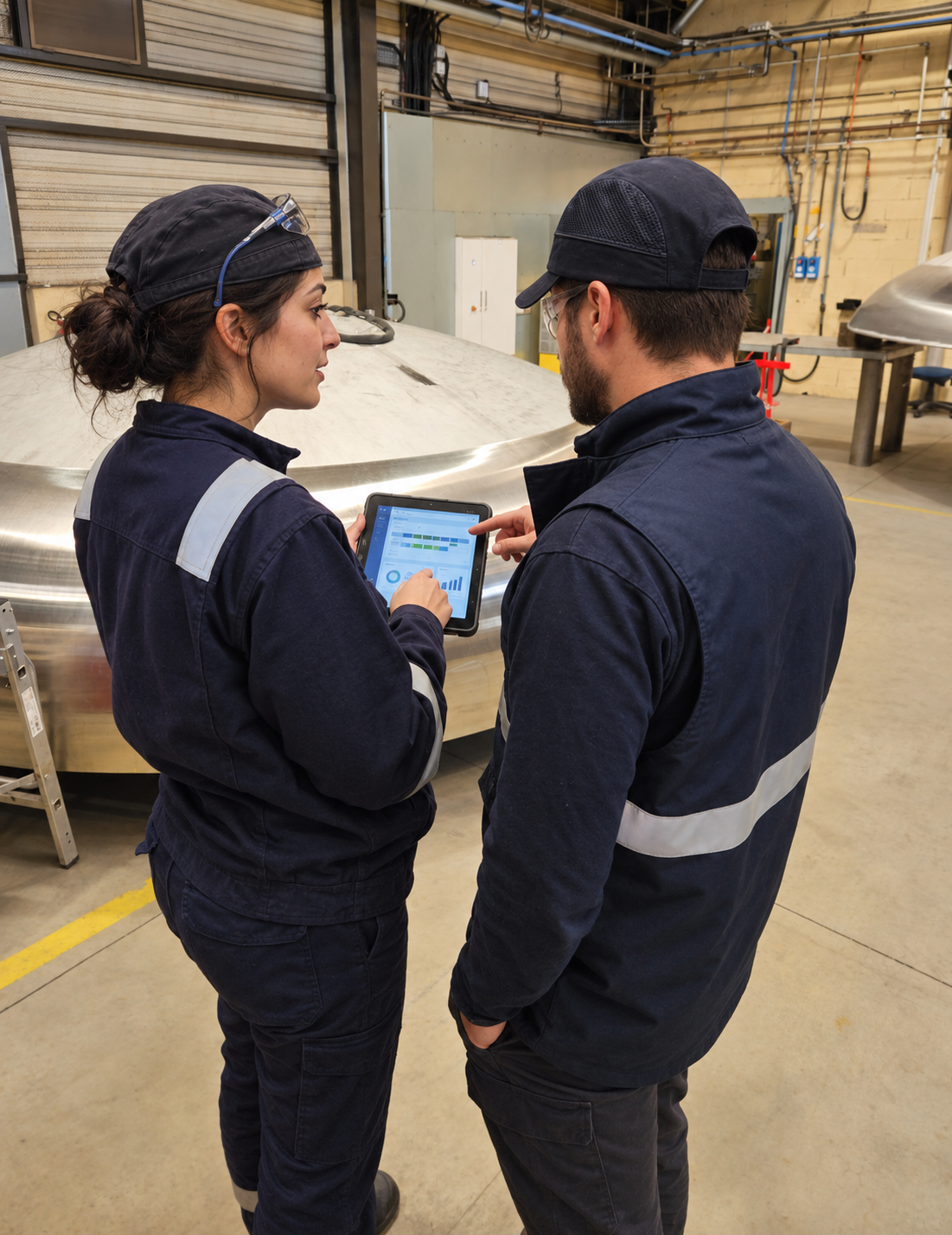
The reason is presence: the project team was beside them as they used the tool. Support at the workstation achieved what the classroom could not.
The first step was modest. Some welders were already using the tablet for their daily log before the pilot even began. A simple use, integrated into everyday work, opened the door to what came next.
What is happening: the foot-in-the-door effect (Freedman and Fraser)
Psychologists call this the “foot-in-the-door” effect: someone who has agreed to a first simple action is more likely to agree to the next ones. Action builds commitment more than talk. Each step is short enough to fit between two tasks and practical enough to be useful the following day.
The project team drew lessons for the rest of the rollout: shorter training sessions, tailored to different roles. The methods lead explains:
“Instead of taking people out for three days, make it just one day and strengthen support on the shop floor.”
PERIVIA builds on this principle: knowledge is captured during real work, everyone stays at their workstation, and know-how becomes available on a tablet as needs arise.
To transform without stopping the workshop, bring the project to the workstation and provide each piece of knowledge when the technician needs it.
Knowledge sharing
In every team, a handful of people hold most of the know-how. How can you move change forward when everyone already needs their help?
Read the article